Nordic vs Japandi Lighting: How to Tell Them Apart and Style Them
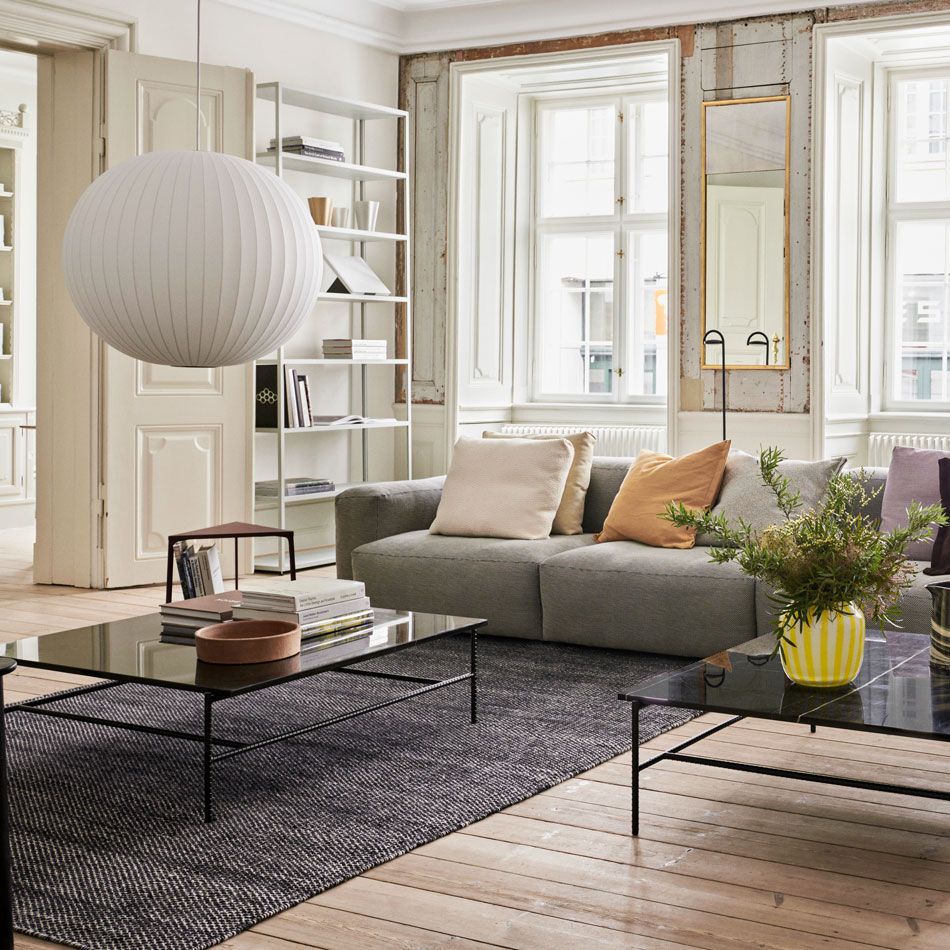
Nordic style is bright, clean and practical, built around pale surfaces, simple shapes and soft, warm light. Japandi keeps that simplicity but borrows from Japanese design: a quieter, earthier palette, more natural texture and a preference for handmade, slightly imperfect pieces. In lighting terms, Nordic leans towards crisp, minimal forms, while Japandi leans towards organic shades such as rattan, ceramic and paper-like globes.
Where the two styles overlap
Both styles come from the same idea: less clutter, honest materials and pieces that earn their place. That is why they mix so easily, and why many rooms described as "Japandi" are really Scandinavian rooms with a calmer palette. Both favour natural light, light wood, uncluttered surfaces and lamps that look good even when switched off. The differences are mostly about mood, colour and material, and these are general design observations rather than strict rules.
Nordic vs Japandi at a glance
| Feature | Nordic (Scandinavian) | Japandi |
|---|---|---|
| Overall mood | Bright, airy, cosy and functional | Calm, grounded, quiet and contemplative |
| Typical palette | White, soft grey, pale wood, occasional colour accents | Warm neutrals, oatmeal, clay, charcoal, muted earth tones |
| Favoured materials | Pale wood, painted metal, glass, wool | Rattan, ceramic, linen, darker wood, stone |
| Lamp shapes | Cones, linear forms, arcs, simple globes | Rounded organic shades, woven or handmade-looking forms |
| Furniture height | Standard height, slim legs | Often lower to the ground, with solid, simple forms |
| Attitude to imperfection | Neat and polished | Welcomes handmade, wabi-sabi character |
How to recognise a Nordic light
Nordic fittings tend to be graphic and uncomplicated. Think of a single cone pendant, a slim linear floor lamp or a clean arc that reaches over a sofa. Black and white are common, and some pieces add a bright colour for contrast. The light itself is usually warm or adjustable, because the style is built around making long, dark evenings feel comfortable.
If you want the look, browse the Nordic Collection and start with one strong silhouette rather than several competing ones.
How to recognise a Japandi light
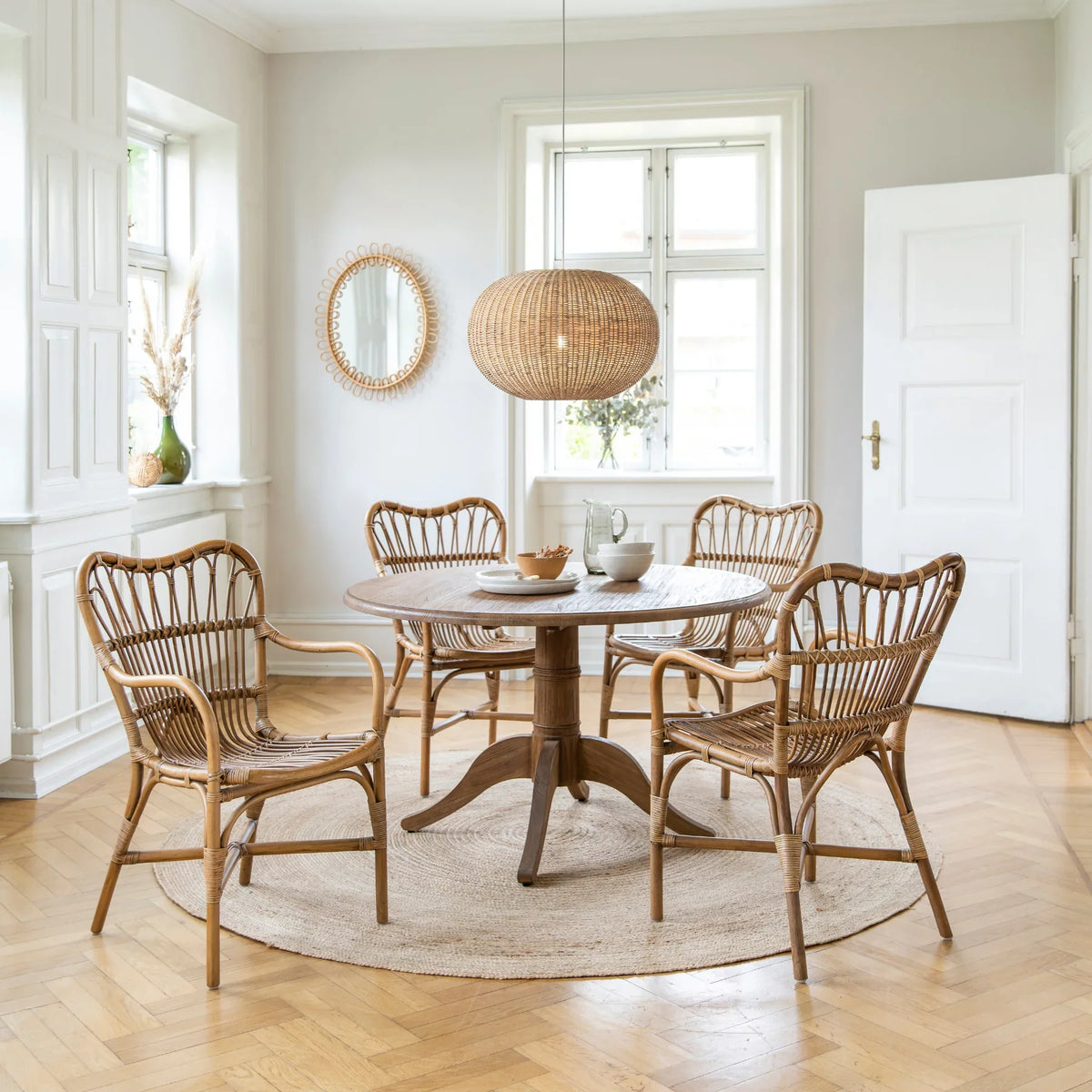
Japandi lighting softens the room with texture. Rattan and wicker shades throw a gentle pattern of light and shadow, and ceramic pendants bring a handmade, tactile feel. Shapes are rounded rather than sharp, and finishes are matte or natural rather than glossy. The effect is less about making a statement and more about making the room feel settled.
Styling tips for each look
Styling Nordic
- Keep walls and large furniture light, then let one black or coloured lamp act as the accent.
- Choose warm white bulbs for living areas and bedrooms so the light stays inviting.
- Use a floor lamp to fill a dark corner instead of adding more ceiling fixtures.
Styling Japandi
- Pick two or three natural materials, such as rattan, linen and wood, and repeat them across the room.
- Hang pendants lower over tables, and keep furniture low and simple to match.
- Leave empty space around each piece so the shapes can breathe.
Choosing by room
In a dining room, a Nordic cone or linear pendant gives a crisp, modern line, while a rattan or ceramic pendant makes the table feel softer and more informal. In a living room, an arc floor lamp suits a Nordic scheme because it lights a seating area without needing a ceiling fixture, whereas a Japandi living room often relies on a low table and one textured shade to set the mood. In a bedroom, a single ceramic or woven pendant beside the bed keeps things quiet and uncluttered. As a general guide, pick the light first, then match the furniture finish and fabrics to it, because the lamp is usually the strongest visual element in the room.
Mixing the two
You do not have to choose. A common approach is to use Nordic structure (light walls, clean lines, a simple linear lamp) and layer Japandi texture on top (a rattan shade, a ceramic pendant, a low wooden table). Keep the palette to three or four tones and limit yourself to one statement light per area. If a room feels busy, remove a piece rather than adding another.
Our picks
These are products currently in our store that suit each style. Check each product page for sizes, options and bulb details.
- Nordic Cone Shaped Pendant Lights: a simple iron and aluminium cone with a height-adjustable ceiling rod, offered in several body colours. A clear Nordic choice for kitchens and bars.
- Nordic Arc Floor Lamp: a 170 cm tall aluminium arc with a colour temperature range from 3000K (warm white) to 6000K (cool white), in black or white.
- Japandi Natural Wicker Light Shade: a rounded rattan shade in small, medium and large sizes, suited to dining tables and bedrooms.
- Japanese Style Ceramic Pendant Light, White: a white ceramic shade with a polished copper fitting, available as singles or larger multi-pendant sets.
- Retro Pine & Iron Round Coffee Table: a low, round table in solid pine with an iron frame, in a simple Japanese-inspired style.
For more pendant options, see our Pendant collection, and for freestanding light see the Floor Lamp collection. Please note that fixtures should be installed by a licensed electrician, and you can find answers on delivery and returns on our FAQ page.
FAQ
Is Japandi the same as Scandinavian style?
No. Japandi combines Japanese and Scandinavian ideas, so it shares the simplicity of Nordic design but adds earthier colours, more natural texture and a stronger appreciation of handmade imperfection.
Which style is better for a small room?
Either can work. Nordic's light palette helps a small room feel open, while Japandi's low furniture and uncluttered layout keep it calm. Choose fewer, simpler pieces in both cases.
What bulb colour suits these styles?
Warm white is a common choice for living rooms and bedrooms in both styles because it keeps the mood relaxed. Cooler light can suit task areas, and some of our lights offer both options.
Can I use both styles in one home?
Yes. Keep a consistent palette, repeat a couple of materials and limit statement lights to one per area, and the styles will blend naturally.
Modern Space Living offers free standard shipping worldwide, delivered in 2–4 weeks (chairs and wall panels 7–10 weeks), with a 2-year warranty.