
Warm White vs Cool White: Choosing Light Colour by Room
Use warm white (about 2700K to 3000K) in bedrooms, living rooms and dining rooms, where you want to relax, and neutral to cool white (about 4000K to 5000K) in kitchens, bathrooms, home offices and workspaces, where you want to see detail clearly. If you cannot decide, pick a fixture with adjustable colour temperature so you can change the light to suit the time of day. The figures below are general guidance, not strict rules, so trust your own eyes in your own room.
What colour temperature actually means
Colour temperature is measured in kelvins (K) and describes how warm or cool the light looks. A lower number looks more yellow and cosy, like a traditional incandescent bulb or candlelight. A higher number looks whiter and bluer, closer to daylight on an overcast day. It says nothing about how bright a lamp is, which is measured in lumens. If you want to work out brightness first, see our guide on how many lumens each room needs.
| Label | Typical range | How it feels | Good for |
|---|---|---|---|
| Warm white | 2700K to 3000K | Soft, golden, relaxing | Bedrooms, living rooms, dining rooms, reading corners |
| Neutral white | 3500K to 4000K | Clean and balanced | Kitchens, hallways, bathrooms, craft areas |
| Cool white | 5000K to 6500K | Crisp, bright, daylight-like | Home offices, garages, task and study lighting |
Choosing colour temperature room by room
Living room
Most people prefer warm white here because the room is used mostly in the evening. A warm main light with a few lower table or floor lamps makes the space feel inviting. If you use the room for hobbies or reading during the day, a lamp you can switch to a neutral setting gives you flexibility.
Bedroom
Warm white is the usual choice, especially for bedside lamps and wall lights. Many people like a cooler setting available for getting dressed or tidying up, which is why adjustable ceiling and wall lights work well in bedrooms.
Kitchen and dining area
Kitchens are working spaces, so neutral white (around 3500K to 4000K) helps you see food and surfaces clearly. A dining table, on the other hand, usually looks best under warm light. If your kitchen and dining area are one open room, use neutral light over the prep zone and warm light over the table.
Bathroom and dressing area
Neutral white is a sensible starting point for mirrors and grooming. Choose fittings designed for bathrooms and have any wiring done by a licensed electrician.
Home office and study
Neutral to cool white suits desk work because it looks brighter and crisper. Add a warm lamp elsewhere in the room so the space does not feel clinical at the end of the day.
Children's room and hallway
A hallway works well in neutral white because people are passing through rather than relaxing. In a child's room, warm light is a gentler choice for bedtime, and an adjustable setting helps for homework.
Warm, neutral or cool: a quick way to decide
Ask yourself what you do in the room. If the answer is mostly resting, talking, eating or reading before bed, lean warm. If it is mostly cooking, grooming, studying or working, lean neutral or cool. If the answer is both, choose a fixture with several settings or combine two light sources, such as a ceiling light for general use and a table lamp for the evening.
It also helps to think about the time of day. Natural daylight is cooler and brighter in the middle of the day and warmer in the late afternoon, so many people like their artificial light to follow a similar pattern: crisper in the morning, softer after dinner. Fixtures with switchable settings make this easy without changing bulbs.
Finally, consider the finish of the lamp itself. Gold and brass details tend to look richer in warm light, while black, white and aluminium finishes look good in almost any setting.
Tips for getting it right
- Keep one temperature per room where you can. Mixing a very warm lamp with a very cool ceiling light usually looks uneven. Small differences are fine.
- Remember that surfaces change the look. Warm light flatters wood, brass and cream walls, while cooler light can make white and grey walls look sharper.
- Layer your lighting. Combine a main light with table, floor or wall lamps at different heights so you can choose the mood.
- Test before committing. Look at the lamp in the evening and in the morning, because daylight changes how every colour temperature appears.
- Choose adjustable fixtures for rooms that do several jobs. A spare room that doubles as an office is a good example.
Our picks
These lamps from Modern Space Living let you choose or change the colour temperature. Check each product page for the options and details available.
- Three-Colour LED Ceiling Lamp: a low-profile LED ceiling light with three colour temperature settings from warm to cool white, described for bedrooms, hallways, kids' rooms and rooms with standard ceiling height.
- Moon Wall Lamp: a round, moon-shaped wall light with touch dimming and three colour temperatures, suited to a soft glow beside the bed.
- Acrylic Light Guide Table Lamp: a gold-framed table lamp with an acrylic edge that glows. You choose Warm White or Cool White when ordering, and the lamp is not dimmable.
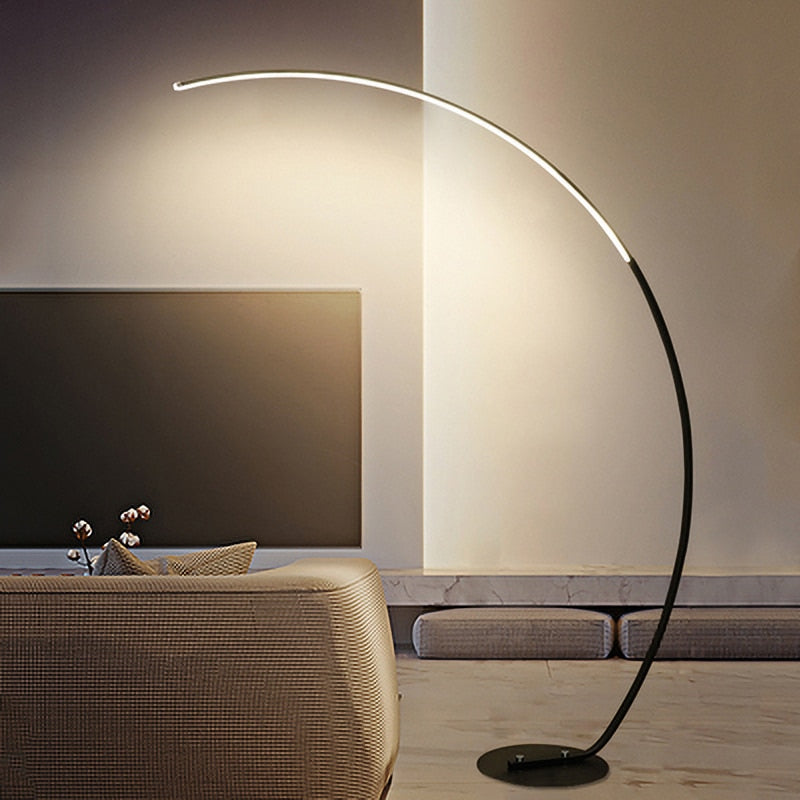
- Nordic Arc Floor Lamp: a Scandinavian-style arc floor lamp listed with a colour temperature range of 3000K (warm white) to 6000K (cool white), in black or white.
To keep browsing, see our ceiling lights, table lamps and wall lights.
Frequently asked questions
Is warm white or cool white better for a bedroom?
Warm white is the usual choice because it feels calm and cosy in the evening. An adjustable light lets you switch to a cooler setting when you need clearer light.
Can I mix warm and cool white in one room?
You can, but strong contrasts often look uneven. If you want both, separate them by purpose, for example cooler task light at a desk and warm ambient light elsewhere.
Does a higher kelvin number mean a brighter light?
No. Kelvins describe how warm or cool the light looks, while lumens describe how much light is produced. A warm lamp and a cool lamp can have the same brightness.
Do I need an electrician to install a new light?
For any fixed wiring, such as a ceiling or hard-wired wall light, hire a licensed electrician. Plug-in lamps do not need wiring work.
If you have questions about ordering, delivery or returns, our FAQ page has the answers.
Modern Space Living offers free standard shipping worldwide, delivered in 2–4 weeks (chairs and wall panels 7–10 weeks), with a 2-year warranty.